Help for moving basement walls
Bowing Basement Wall Repair
See inward movement or horizontal cracking? Get a free estimate.
Help for moving basement walls
See inward movement or horizontal cracking? Get a free estimate.
A basement wall that bows, leans or develops a long horizontal crack may be reacting to pressure from the soil outside. Water-saturated ground can add to that pressure, particularly where drainage around the home is poor. Once a wall is visibly moving, covering the crack or painting the surface does not address the structural condition.
We evaluate how the wall is moving, what it is made from, how much exterior access is available and whether groundwater or surface drainage appears to be contributing. The goal is to select a stabilization approach suited to the wall and address related water conditions when necessary.
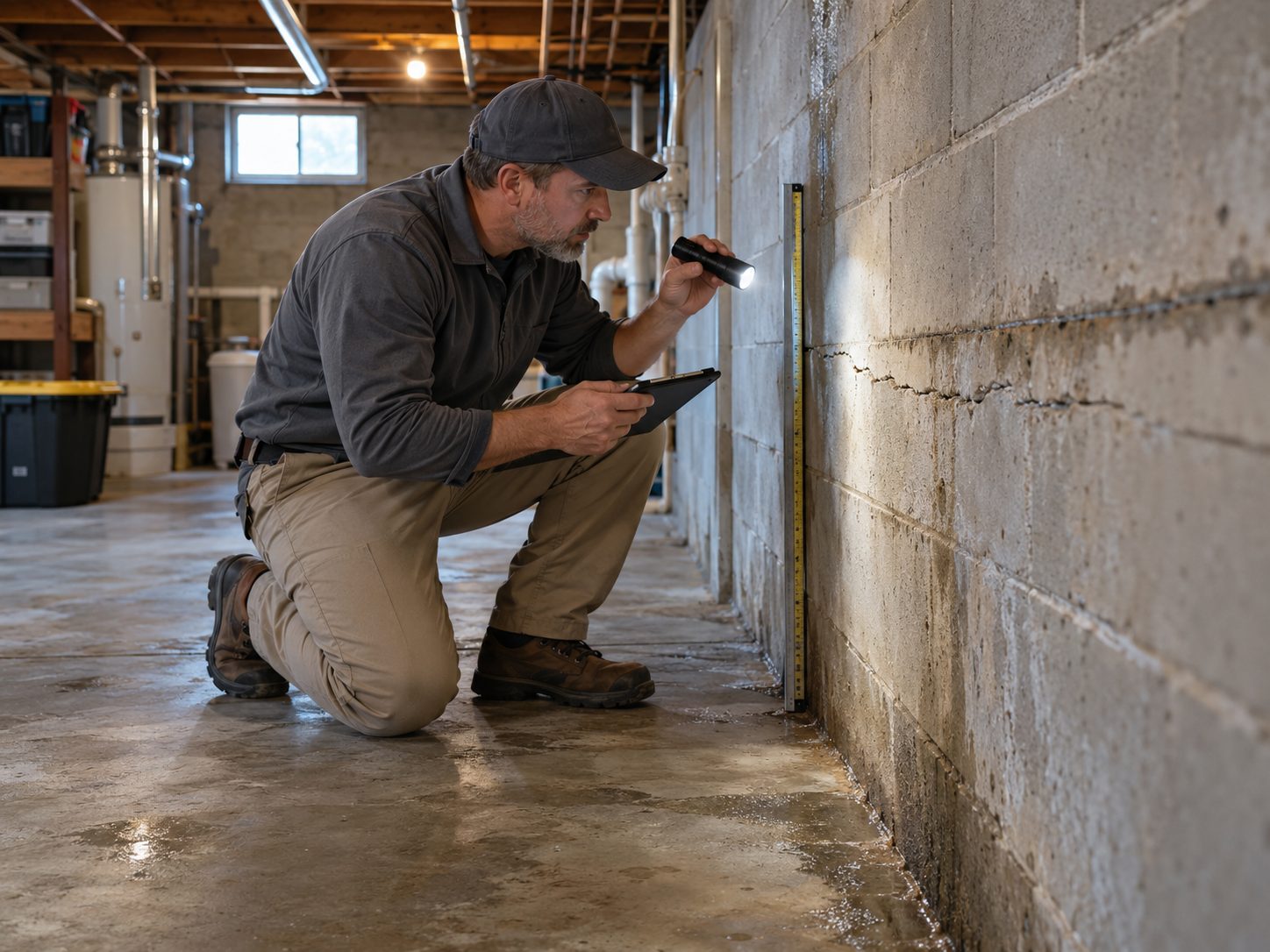
Bowing commonly develops over time. Catching the symptoms earlier can provide more repair options and make it easier to address contributing drainage issues.
A horizontal crack through a block or concrete basement wall can be associated with lateral pressure. It is especially important to evaluate when the wall above or below the crack is no longer aligned.
Cracks following mortar joints can appear when a block wall is shifting or being pushed inward. The pattern and displacement help indicate how the wall is behaving.
A wall that curves inward through the middle has experienced movement that deserves structural attention. The amount of movement helps determine which stabilization approaches may be appropriate.
Some walls rotate or lean instead of forming a smooth bow. We look at the entire wall, including corners and connections, before recommending repair.
Standing water, clogged exterior drainage, poor grading or saturated soil can increase pressure against basement walls. Improving water management may be an important part of the overall solution.
| Service | Estimated Cost | Average |
|---|---|---|
| Localized wall stabilization | $1,500-$4,000 | About $2,500 |
| Multiple stabilization points | $3,000-$8,000 | About $5,000 |
| Extensive wall repair or reconstruction | $8,000-$25,000+ | About $15,000 |
Planning ranges vary significantly by wall length, amount of movement, stabilization method, access and whether excavation or drainage improvements are necessary.
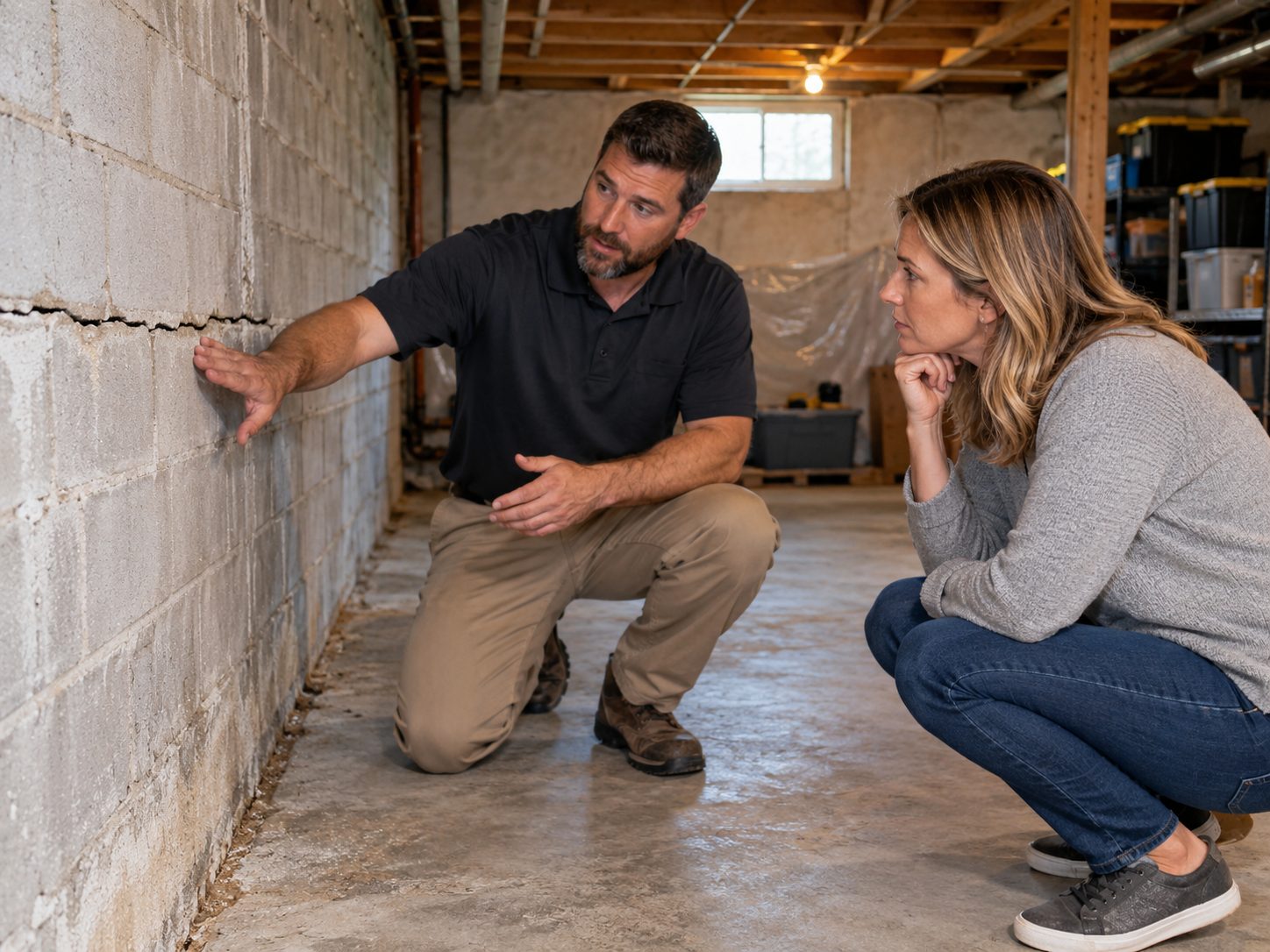
We focus on the wall's structural condition rather than simply filling the visible crack.
Where water pressure is part of the problem, we discuss that connection instead of treating structural and moisture issues as unrelated.
We explain what area requires attention and what the proposed stabilization is intended to accomplish.
A basement wall that is visibly moving deserves a closer look. Tell us what you are seeing.
Free — no obligations
We review cracking, alignment, wall material and the location of visible movement.
Exterior grading, drainage and water conditions are considered because they may affect wall pressure.
The amount and type of movement help guide the stabilization method.
Work is completed according to the agreed scope with attention to the specific wall conditions.
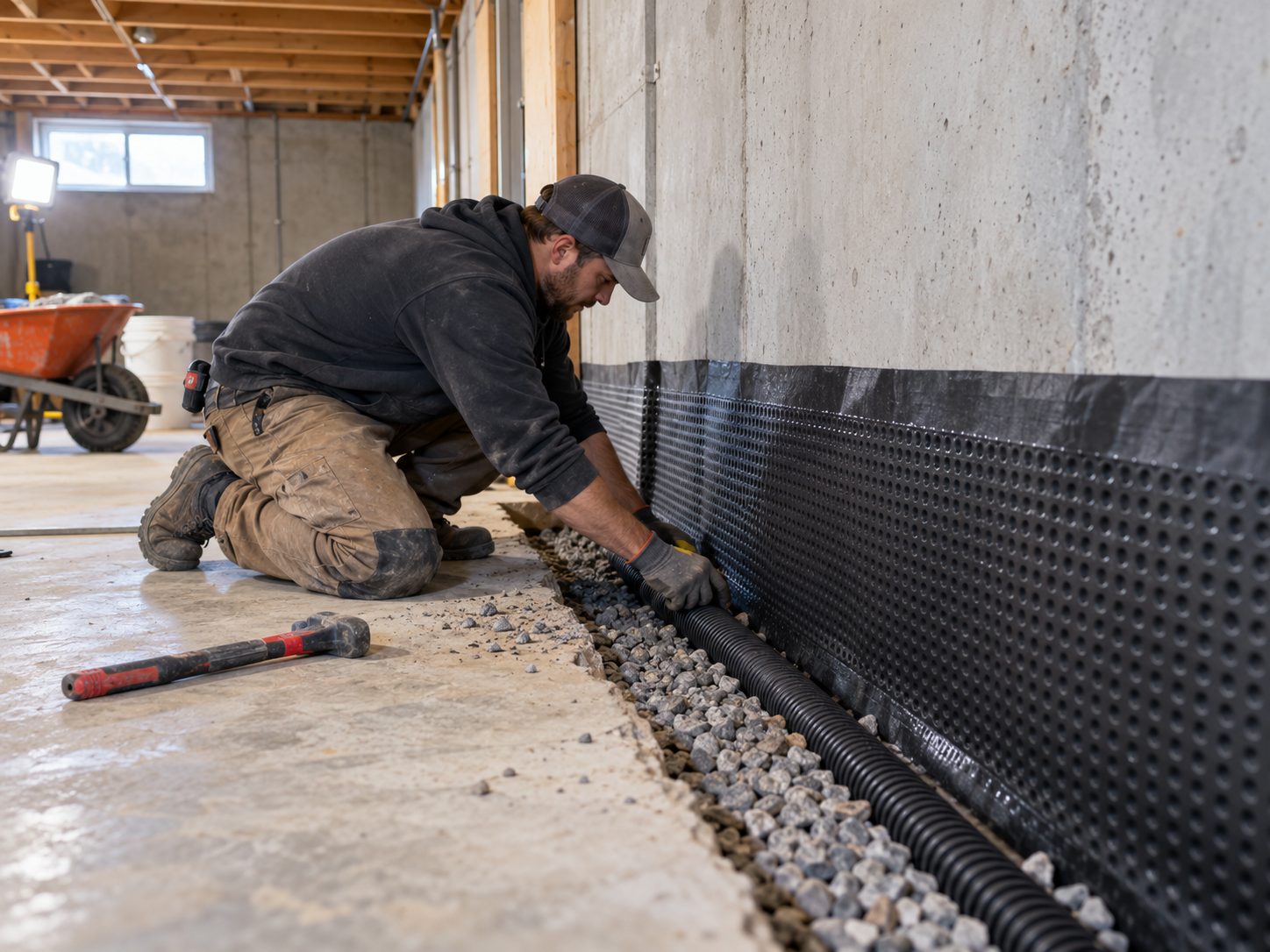
Where appropriate, we explain drainage steps that may help reduce future pressure around the foundation.